 Knowledge
Technical Debt Quadrants
Not all technical debt is created equal. Whether you took it on deliberately or stumbled into it changes everything about how you pay it back.
Martin Fowler’s Technical Debt Quadrants classify debt along two axes: deliberate vs. inadvertent (did you know you were taking on debt?) and reckless vs. prudent (did you have a good reason?). The result is four quadrants, each with a different character and a different response.
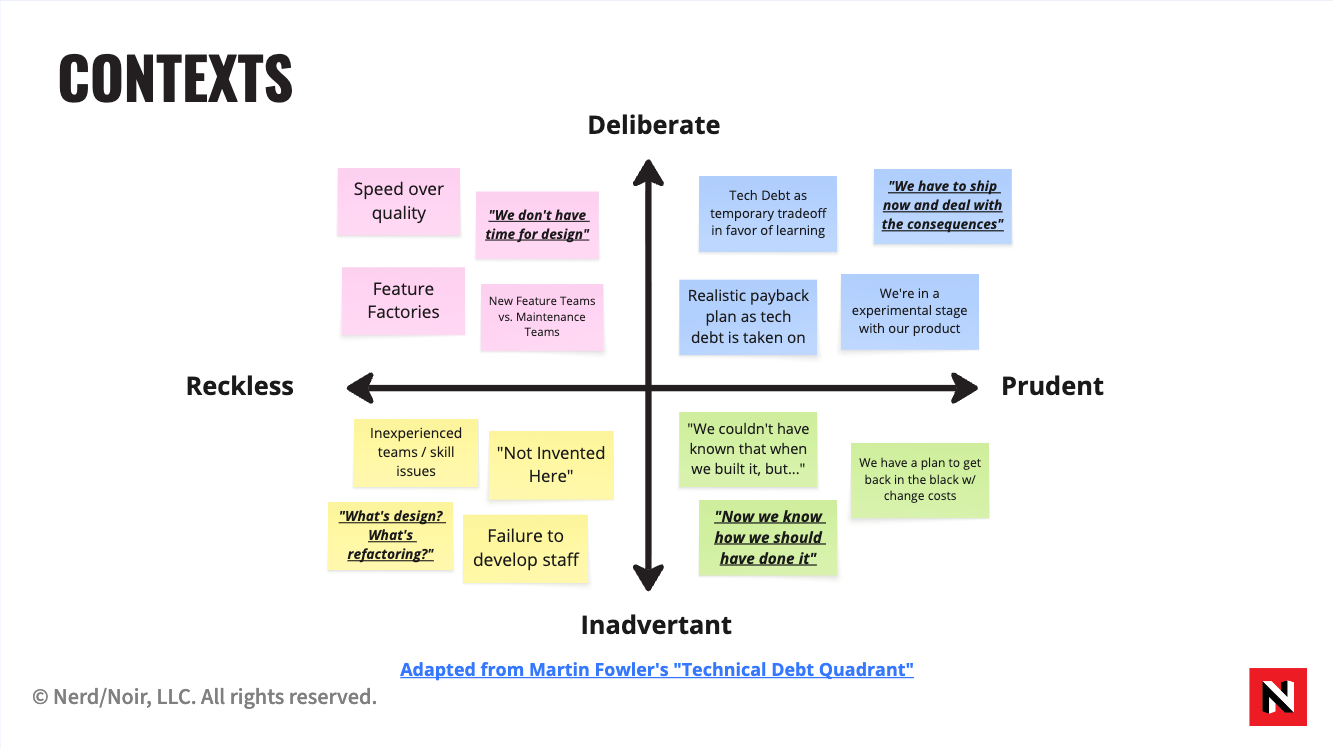
Reckless & Deliberate — “We don’t have time for design.” The team knows it’s cutting corners and doesn’t care. This is the debt that rots fastest because nobody plans to revisit it. Think: copy-pasting a module instead of extracting a shared library because the deadline is tomorrow.
Reckless & Inadvertent — “What’s layering?” The team doesn’t know enough to recognize the debt it’s creating. This is a skill and experience gap, not a scheduling tradeoff. A junior team building its first distributed system without understanding eventual consistency will generate this kind of debt in volume.
Prudent & Deliberate — “We’ll ship now and refactor next quarter.” The team understands the tradeoff and makes it consciously. This is closest to Cunningham’s original metaphor: borrowing against future effort to capture market knowledge today. The key is that the team actually intends to pay it back.
Prudent & Inadvertent — “Now we know how we should have built it.” The team did its best with available knowledge, then learned something that revealed a better approach. This is the most common form of debt in healthy teams; it’s a natural byproduct of learning. You can’t avoid it, only discover it faster.
The quadrants help you understand root causes and select an appropriate countermeasure.
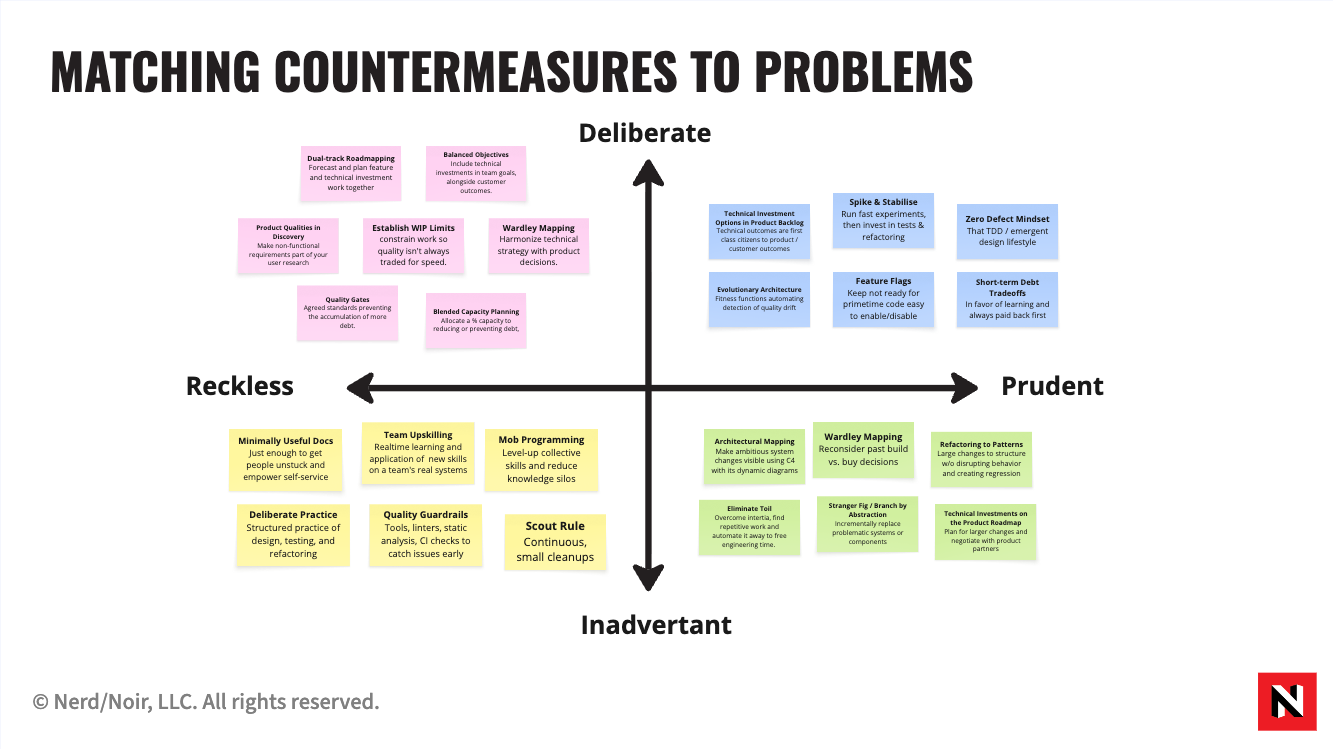
Reckless-deliberate debt needs cultural and leadership intervention, not just refactoring time.
Reckless-inadvertent debt calls for investment in skills: pairing, ensemble programming, training.
Prudent-deliberate debt is a backlog management problem; track it, size it, schedule it.
Prudent-inadvertent debt is often a discovery problem, which is exactly where the Discover-Option-Action Cycle fits: surface what you’ve learned, frame an investment option, and act on it.
Resources
- Technical Debt — the parent concept page
- Technical Debt Metaphor — Cunningham’s original framing that Fowler extended
- Discover-Option-Action Cycle — the cycle for turning discovered debt into investment options
- Martin Fowler, “TechnicalDebtQuadrant” (martinfowler.com, 2009)