 Knowledge
Shook's Model
Stop trying to think your way into a new culture. Change what people do, and the mindset follows.
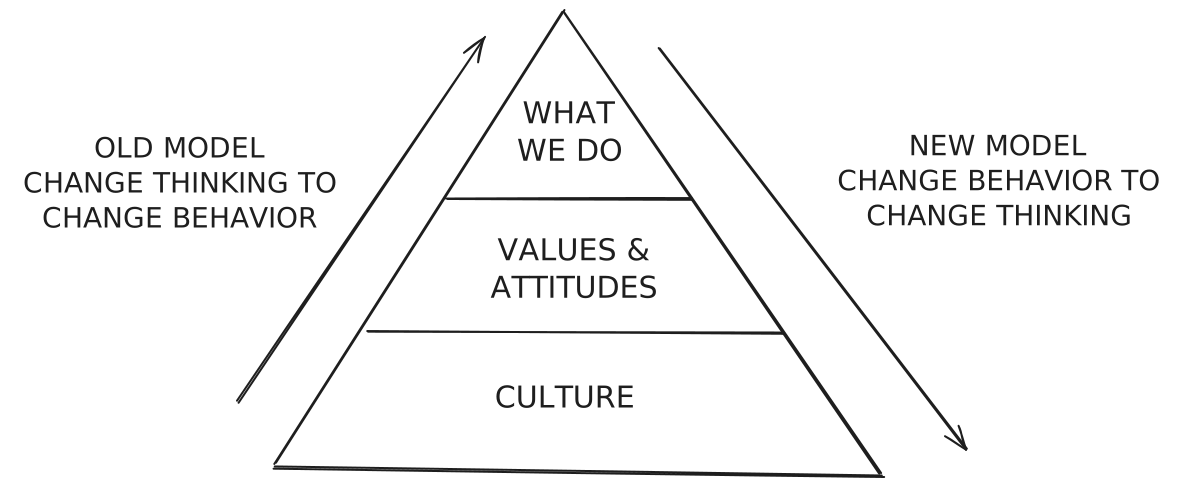
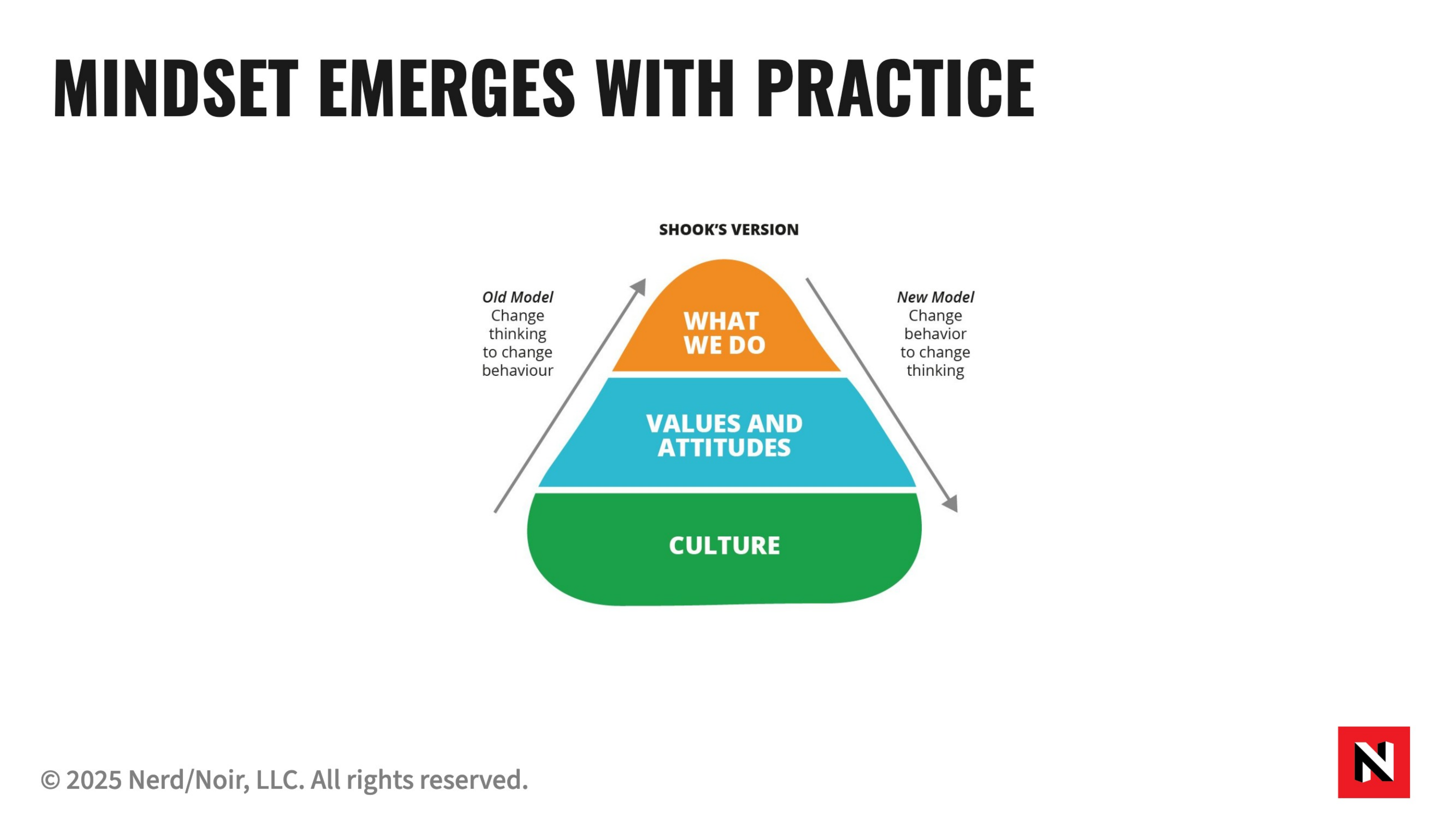
The conventional approach to organizational change starts with thinking: train people on new values, hang posters with new principles, run workshops on mindset. Then hope behavior follows.
John Shook, who helped bring the Toyota Production System to the United States, found the opposite works. Change what people do first. New thinking, values, and eventually culture emerge from the experience of working differently.
This is the core inversion. The old model flows upward: change thinking to change behavior. Shook’s model flows downward: change behavior to change thinking. When people practice new ways of working and see results firsthand, their attitudes shift. Culture isn’t something you install; it’s something that crystallizes around shared practice. This is why quick wins matter so much in change efforts. They provide lived proof that new behaviors produce better outcomes, which rewires beliefs far more effectively than any training deck.
We lean on Shook’s Model constantly. It’s the foundation of our “learn by doing” approach. Instead of teaching teams abstract principles about agile or organizational design, we put them into new structures and practices; Gemba Walks, cross-functional collaboration, iterative strategy cycles. The learning happens in the doing. A guiding coalition models the new behaviors, quick wins prove they work, and culture follows.
Resources
- John Shook, “How to Change a Culture: Lessons from NUMMI”, MIT Sloan Management Review, 2010
- Quick Wins — the fuel that makes behavior change stick
- Guiding Coalition — who models the new behaviors first
- Gemba Walks — observing changed behavior where work happens
- Walking the Walk — be the change you wish to see in your world