 Knowledge
Leading and Lagging Indicators
If you only measure revenue and churn, you're driving by looking in the rearview mirror. Leading indicators are how you steer.
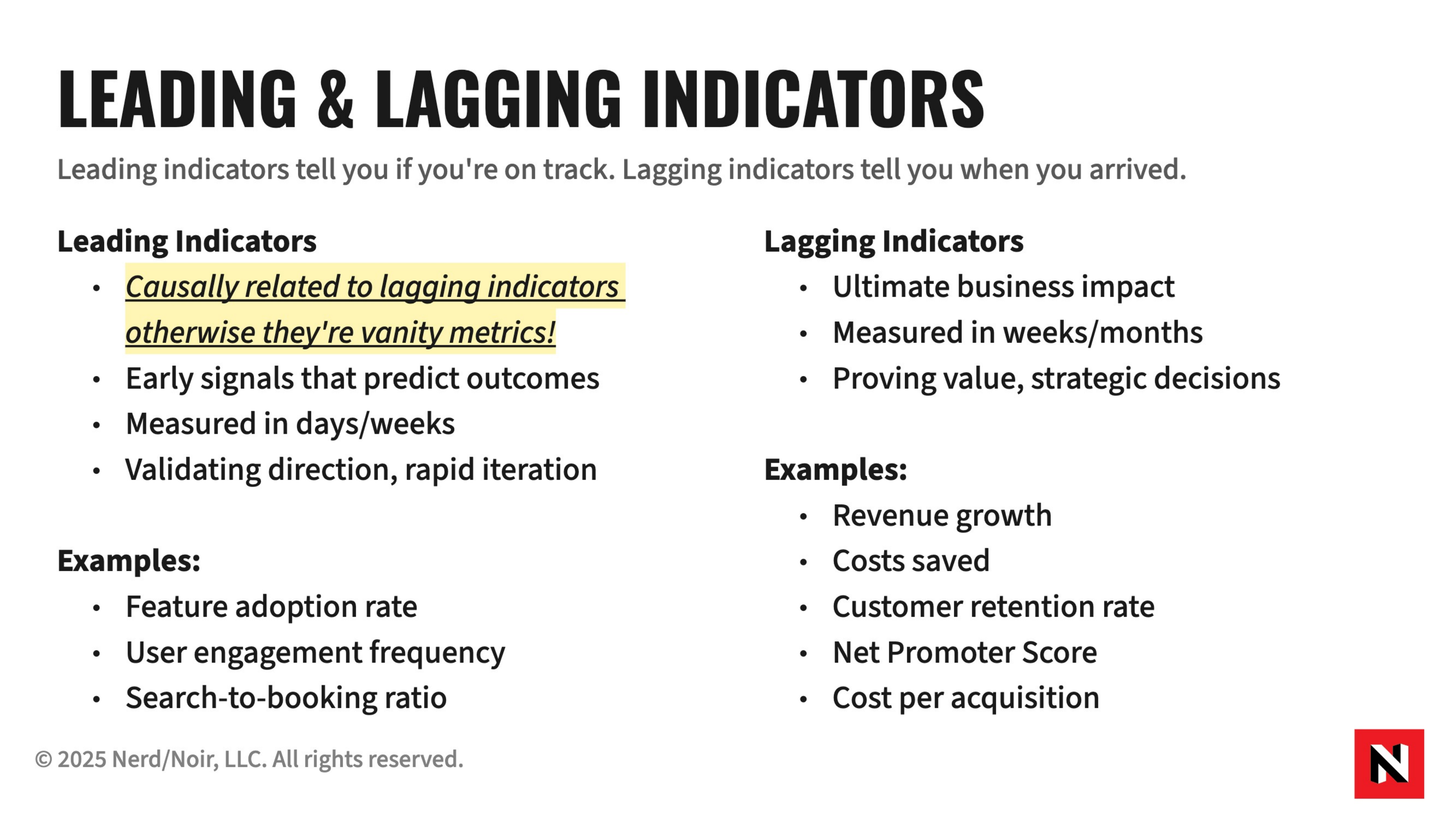
Leading indicators tell you if you’re on track. Lagging indicators tell you when you arrived. The distinction matters because teams that only track lagging indicators (revenue, churn, NPS) find out too late that something went wrong. Leading indicators like feature adoption rate, search-to-booking ratio, or user engagement frequency give you early signals measured in days or weeks, not months or quarters.
The hard part: leading indicators must be causally related to lagging indicators, otherwise they’re vanity metrics. A spike in page views means nothing if it doesn’t connect to conversion or retention.
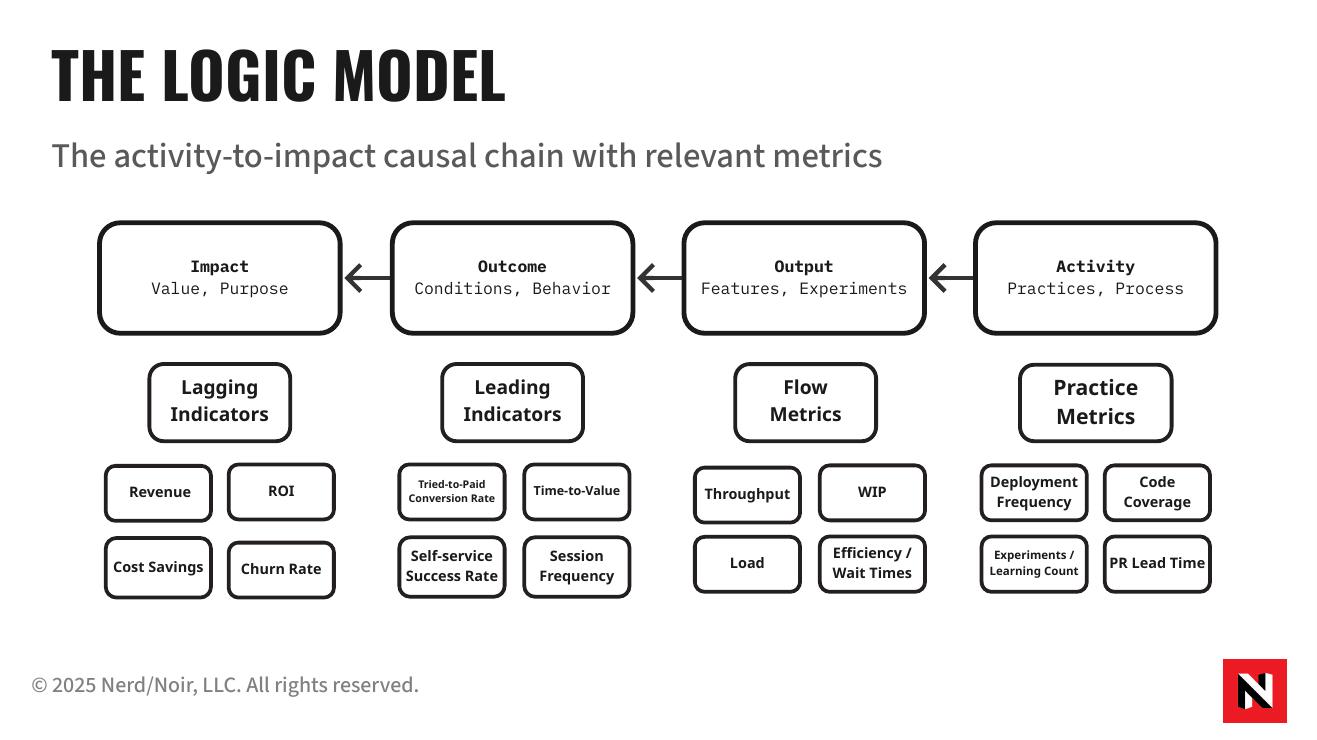
In the Product Logic Model, outcomes are measured by leading indicators and impacts by lagging indicators. This pairing is what makes an outcome-based roadmap useful; you can tell whether you’re making progress toward impact before the lagging numbers move.
Resources
- Product Logic Model — where leading and lagging indicators fit in the causal chain
- Outcomes Over Outputs — outcomes are the behavioral changes that leading indicators measure
- Outcome-Based Roadmaps — hands-on practice pairing leading indicators to outcomes